
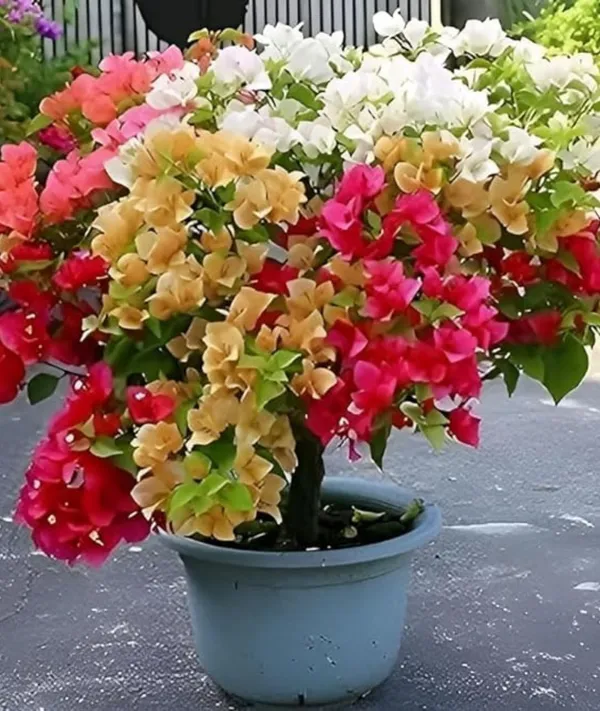
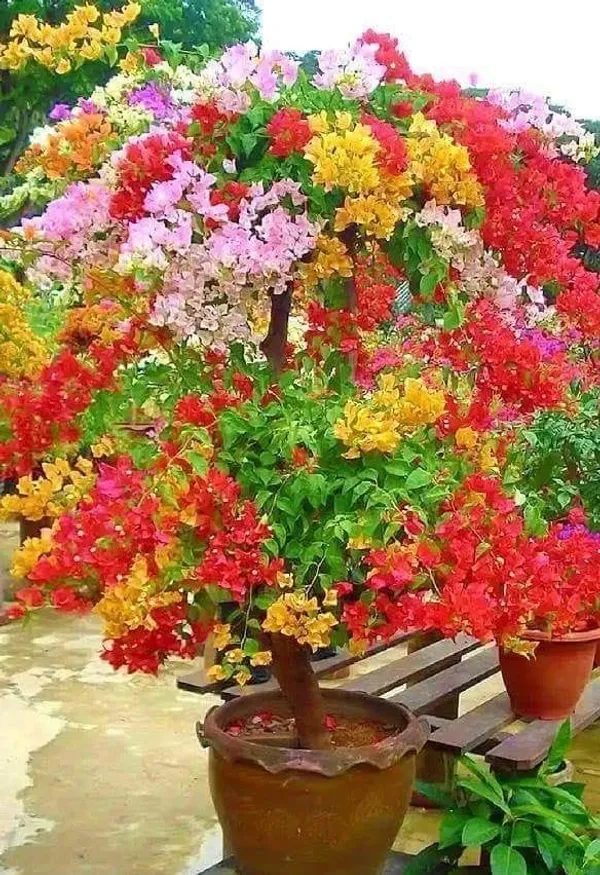
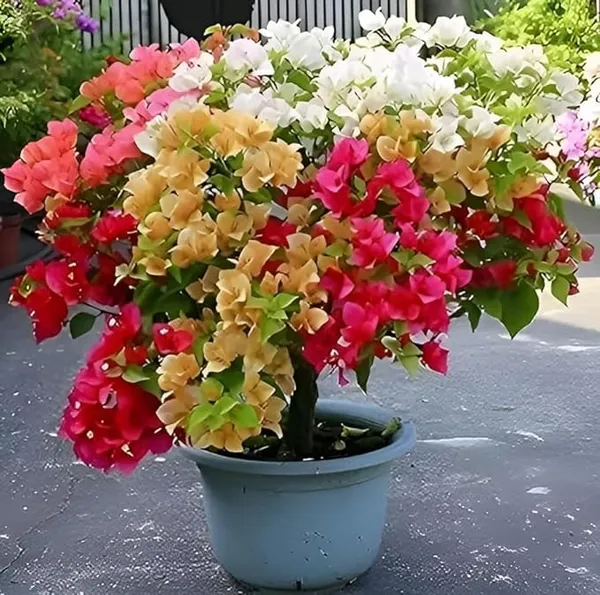
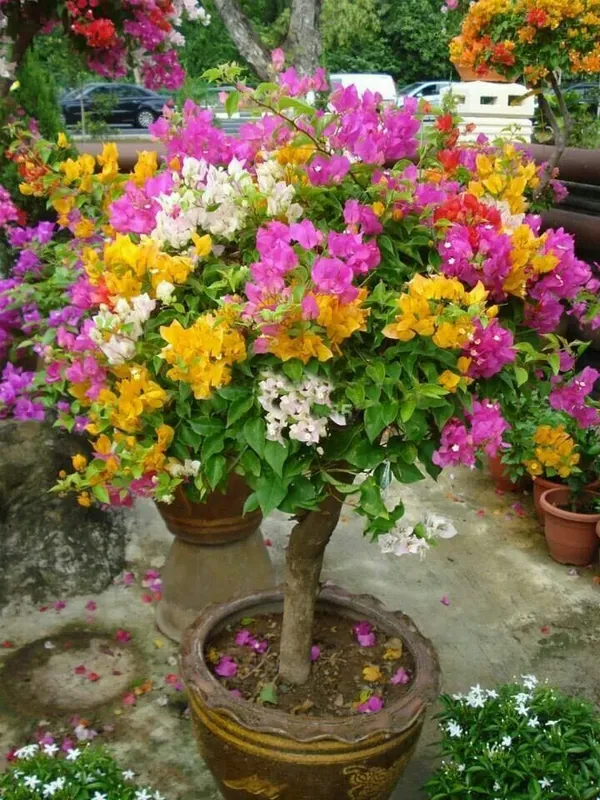

Multicolor Bougainvillea 1-Healthy Flower Plant (Grafted) 5 To 6 Colour Fo..More
₹999
₹4,199
76% OffHurry Up, Shop Now!
0H:0M:0S
Final Price inclusive of all taxes
Free Delivery
Get it delivered in 3-5 days
size
2-3 Feet
Product Information
Brand
Flower
Pack of
India
water regularity
Full Sun
Material Feature
Moderate Watering
Exposure
Bogainvillea Plant
Container Type
Organic
Type Of Seed
Outdoor
Product Description
The Multicolor Bougainvillea is a stunning, grafted plant renowned for its vibrant and diverse blooms. This hardy and versatile climber can adorn gardens, trellises, and fences with a spectacular display of colors, ranging from vivid pinks and purples to oranges and whites. The plant's striking bracts, which resemble petals, create a beautiful contrast against its green foliage, making it a popular choice for adding a splash of color to any landscape.
Care Instructions
Planting:
Location: Choose a sunny spot with at least 5-6 hours of direct sunlight daily.
Soil: Plant in well-drained soil with a slightly acidic to neutral pH.
Spacing: Space plants about 3-4 feet apart to allow for ample growth.
Watering:
Initial Period: Water regularly until the plant is well-established.
Maintenance: Once established, water sparingly. Bougainvillea thrives in dry conditions and is drought-tolerant.
Fertilizing:
Schedule: Fertilize every 4-6 weeks during the growing season.
Type: Use a balanced, slow-release fertilizer or a high-phosphorus fertilizer to encourage blooming.
Pruning:
Timing: Prune after the flowering cycle to maintain shape and promote new growth.
Method: Trim back excess growth and remove any dead or damaged branches.
Pest and Disease Control:
Common Pests: Watch for aphids, caterpillars, and spider mites.
Treatment: Use insecticidal soap or neem oil for pest control. Ensure proper air circulation to prevent fungal diseases.
Support:
Structure: Provide support like a trellis or fence for climbing varieties.
Training: Guide and tie new growth to the support structure to shape the plant
Care Instructions
Planting:
Location: Choose a sunny spot with at least 5-6 hours of direct sunlight daily.
Soil: Plant in well-drained soil with a slightly acidic to neutral pH.
Spacing: Space plants about 3-4 feet apart to allow for ample growth.
Watering:
Initial Period: Water regularly until the plant is well-established.
Maintenance: Once established, water sparingly. Bougainvillea thrives in dry conditions and is drought-tolerant.
Fertilizing:
Schedule: Fertilize every 4-6 weeks during the growing season.
Type: Use a balanced, slow-release fertilizer or a high-phosphorus fertilizer to encourage blooming.
Pruning:
Timing: Prune after the flowering cycle to maintain shape and promote new growth.
Method: Trim back excess growth and remove any dead or damaged branches.
Pest and Disease Control:
Common Pests: Watch for aphids, caterpillars, and spider mites.
Treatment: Use insecticidal soap or neem oil for pest control. Ensure proper air circulation to prevent fungal diseases.
Support:
Structure: Provide support like a trellis or fence for climbing varieties.
Training: Guide and tie new growth to the support structure to shape the plant